The New World Nile: How American Geography Mirrors Ancient Egypt”

The New World Nile: How American Geography Mirrors Ancient Egypt”
About this book
Chapter 1 — The Nile and the Mississippi Egypt was defined by the Nile. America is defined by the Mississippi river system.
Both run north–south, create fertile floodplains, serve as trade arteries, and anchor population centers. Civilizations arise where rivers behave this way.
Chapter 2 — Upper and Lower Lands Egypt was divided into Upper and Lower regions by elevation and river flow. America follows the same pattern: upper river highlands and lower delta regions.
Control of the delta historically meant control of the nation.
Chapter 3 — Sacred Mounds and Pyramidal Forms North America once contained tens of thousands of pyramidal earthworks, especially along the Mississippi basin. Cahokia rivaled Old World cities.
These structures were systematically erased, minimized, or reclassified. Chapter 4 — The Grand Canyon as the Valley of the Kings Egypt carved sacred history into stone cliffs.
The Grand Canyon presents stratified stone walls, sealed caves, and restricted interior access. Egypt excavates its sacred sites. America seals them.
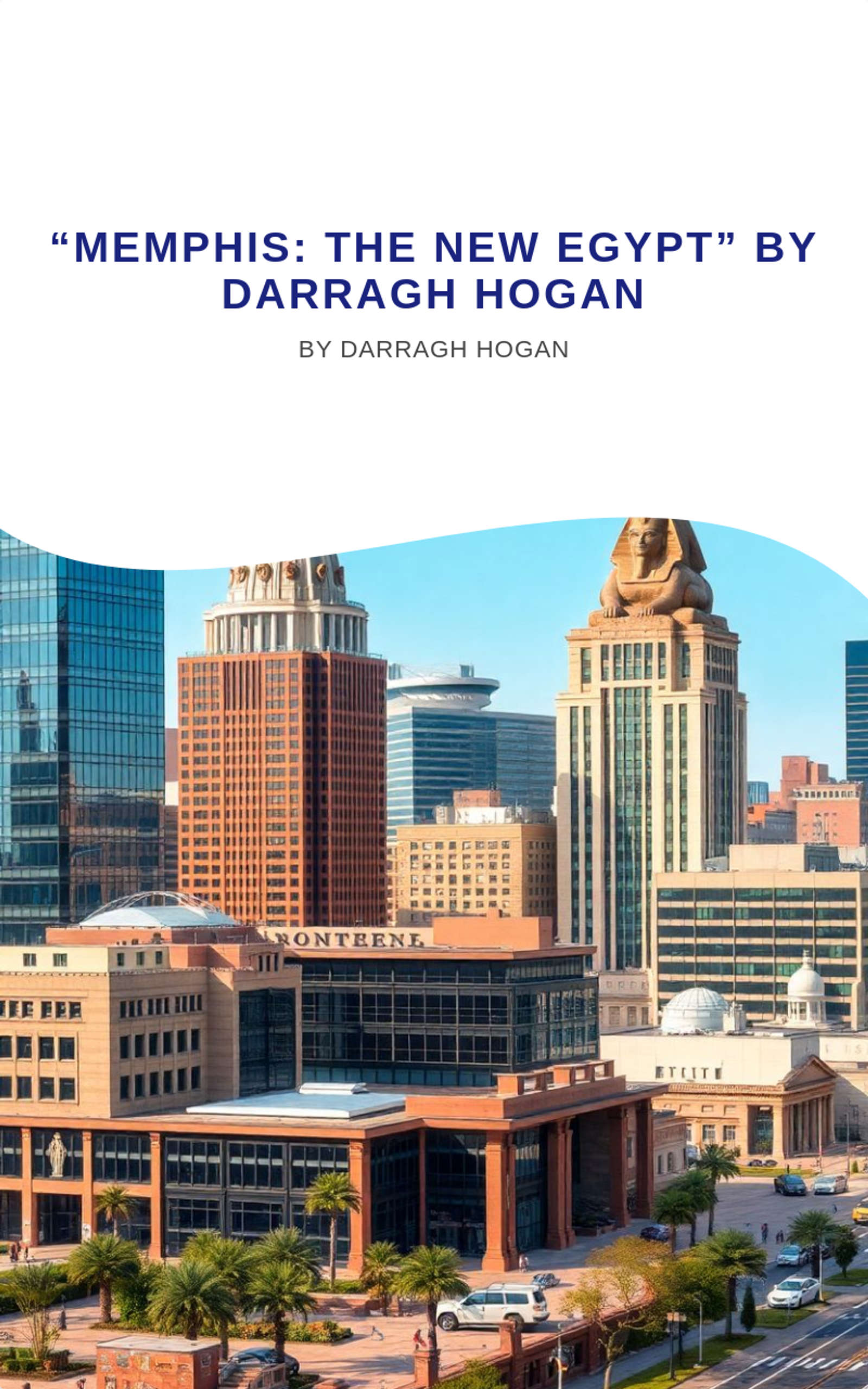
Chapter 5 — Place Names That Shouldn’t Exist Cairo, Memphis, Thebes, Nile—Old World names embedded across America.
These are dismissed as romantic naming, yet naming follows memory, power, and inheritance, not whim. Chapter 6 — The Geometry of Power Egyptian civilization was obsessed with geometry and alignment.
Washington DC mirrors this with obelisks, axes, reflecting pools, and solar alignments. The Washington Monument is an Egyptian obelisk in function and form.
Chapter 7 — Flood Myths and Reset Cycles Egypt preserved flood cycles through myth and measurement.
Indigenous American histories speak of floods, destroyed worlds, and cyclical resets—aligning with geological evidence of catastrophic flooding.
Chapter 8 — The Erasure of the Builders Egypt remembered its builders. America forgot—or was made to forget. Early settlers reported advanced cities and earthworks.
Within generations, these were reattributed to “primitive” cultures incapable of such engineering. Chapter 9 — Gold, Copper, and Sacred Metals Egypt’s power rested on gold.
America’s ancient economy revolved around copper and precious metals, particularly in the Great Lakes region, where industrial-scale mining predates European arrival.
Chapter 10 — Serpent Mounds and Cosmic Order Egypt preserved cosmic order (Ma’at). America preserved it in earthworks aligned to solstices, stars, and lunar cycles.
These were calendars and cosmologies, not burial sites.
Chapter 11 — Why the Comparison Is Forbidden Comparing America to Egypt undermines the idea that civilization only flowed westward from the Old World.
It suggests cycles, not linear progress—and cycles threaten institutional authority. Chapter 12 — Control Through Classification Evidence is not destroyed; it is reclassified. Mounds become “natural.
” Alignments become “coincidence. ” Oral histories become “myth. ” Control is maintained through labels, not lies.
Chapter 13 — America as a Successor, Not a Discovery America was not discovered; it was inherited. Its rivers, monuments, and capital echo Egypt.
The discomfort lies not in the parallels, but in what acknowledging them would imply. Conclusion — Geography Never Lies Empires rise where geography allows them. Egypt rose along the Nile.
America rose along the Mississippi. Stone erodes. Stories change. Geography remembers. This email serves as a personal archival copy of the full manuscript.
Customer Reviews
No reviews yet
Be the first to share your experience. Your review helps others decide!
You Might Also Like